Tutorial: grid pathfinding
A complete, runnable walk-through of pathfinding on a maze — from building the map to animating A*.
1. Build a maze
import graphfinder as gf

maze = """
S.......#.
.#####.#..
.#...#.#.#
.#.#.#.#.#
.#.#...#.#
...#.####G
""".strip()
Or generate a reproducible random one (regenerate until solvable):
2. Run A*
r = gf.search(maze, algorithm="astar", heuristic="manhattan", record=True)
print(r.found, r.cost, r.nodes_expanded)
print(r.path[:5], "...")
record=True keeps the trace so we can animate it later.
3. See how the heuristic matters
Swap the heuristic and watch the work change while the cost stays optimal:
for h in ["zero", "euclidean", "manhattan"]:
    r = gf.search(maze, algorithm="astar", heuristic=h)
    print(f"{h:10} cost={r.cost} expanded={r.nodes_expanded}")
zero behaves like UCS (floods); manhattan focuses the search. See
Heuristics.
4. Diagonal movement
Allow 8-connectivity and use the matching octile heuristic:
5. Weighted terrain
Give cells a cost (digit 1–9, or a matrix) and the cheapest path stops
being the shortest one — Dijkstra/A* now beat BFS:
terrain = "S99G\n1111"            # top row expensive (9), bottom a cheap detour
gf.search(terrain, algorithm="bfs").cost   # 19.0  (fewest steps)
gf.search(terrain, algorithm="ucs").cost   # 5.0   (least cost)

# arbitrary costs / walls via a matrix (0 ⇒ wall):
costs = [[1, 1, 1], [9, 0, 1], [1, 1, 1]]
r = gf.search_grid_costs(costs, start=(0, 0), goal=(2, 0), algorithm="astar", record=True)
gf.viz.plot_costs(costs)          # terrain heatmap
gf.viz.plot_grid(costs, r)        # the search over the terrain
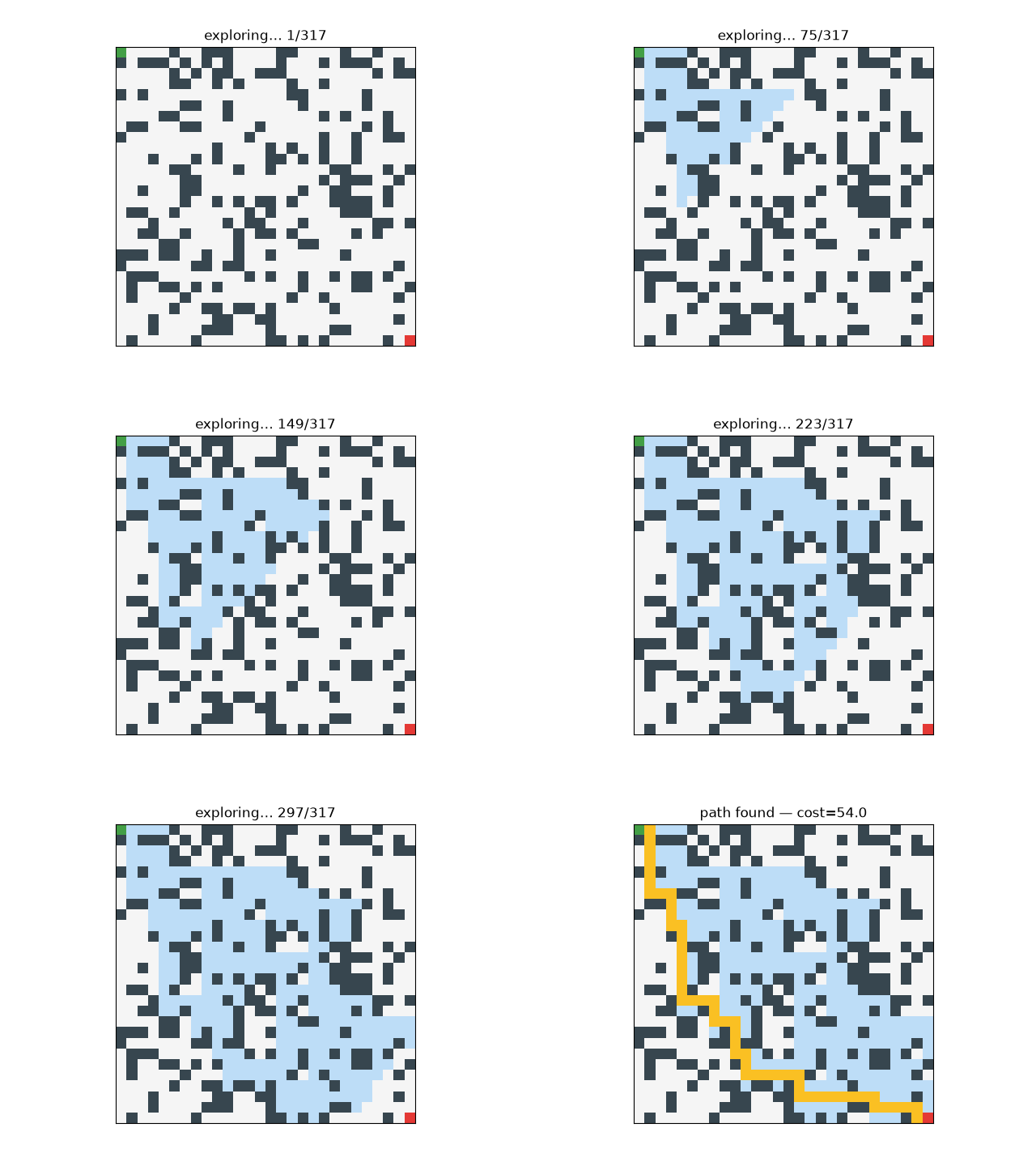
6. Animate it
import matplotlib.pyplot as plt

anim = gf.viz.animate_grid(maze, r, interval=40)
anim.save("astar.gif", writer="pillow", fps=25)   # in a notebook: HTML(anim.to_jshtml())

gf.viz.plot_grid(maze, r)   # or a static snapshot
plt.show()
7. Budget the search
Cap the expansions (useful for huge maps or live demos); the result reports why it stopped:
r = gf.search(maze, algorithm="bfs", heuristic="zero", max_nodes=50)
print(r.found, r.stop_reason)   # False "node_limit"  (if 50 wasn't enough)
Next
- Compare all the algorithms on this maze → Comparing algorithms.
- Move off the grid → random & implicit graphs.